Custom wheels can change the appearance of a car, truck or SUV, but appearance should never be the only consideration.
A wheel and tire package must mount correctly, clear the brakes and suspension, support the vehicle’s weight and provide suitable space throughout steering and suspension movement.
The safest approach is to begin with the vehicle’s specifications and then choose a design that works within those requirements.
Start with the vehicle manufacturer’s specifications
The driver’s door placard and owner’s manual normally provide the original tire size and recommended cold inflation pressure. These specifications provide a reliable starting point. Changing wheel diameter, width or tire size may be possible, but the complete package must remain appropriate for the vehicle.
Do not use the maximum pressure printed on the tire sidewall as the vehicle’s normal inflation target unless the manufacturer specifically requires it.
How to read a tire size
A tire marked 225/65R17 provides several important measurements.
225
This is the nominal tire section width in millimetres.
65
This is the aspect ratio. The sidewall height is approximately 65 percent of the tire’s section width.
R
This identifies radial construction, which is used by most modern passenger vehicle tires.
17
This is the wheel diameter in inches. The tire and wheel diameters must match. A 17-inch tire must be installed on a compatible 17-inch wheel.
Other sidewall markings identify load index, speed rating, manufacturing details and seasonal capability.
Bolt pattern
The bolt pattern describes the number of wheel fasteners and the diameter of the circle they form. A pattern such as 5x114.3 means the wheel uses five fasteners arranged on a 114.3-millimetre circle.
The wheel bolt pattern must match the vehicle. A wheel that looks correct but has the wrong bolt pattern is not a proper fitment. Adapters can introduce additional engineering and clearance considerations. They should not be treated as a universal solution for incompatible wheels.
Wheel diameter and width
Wheel diameter determines the compatible tire diameter. Wheel width affects which tire widths can be mounted safely. A tire manufacturer normally specifies an approved wheel width range for each tire size.
An excessively narrow or wide wheel can change tire shape and performance. It may also create clearance issues or expose the wheel to greater damage.
Wheel offset
Offset describes the relationship between the wheel mounting surface and the wheel centreline. A higher positive offset generally positions the wheel farther inward. A lower offset generally moves the wheel outward.
Changing offset can affect:
- Fender clearance.
- Suspension clearance.
- Steering geometry.
- Bearing loads.
- Tire rubbing.
- Vehicle appearance.
Two wheels with the same diameter and bolt pattern may fit very differently because their widths and offsets are different.
Centre bore
The centre bore is the opening in the middle of the wheel that fits over the vehicle hub. A hub-centric fit helps centre the wheel correctly.
Some aftermarket wheels use hub-centric rings to adapt a larger wheel centre bore to the vehicle hub. The rings must be correctly sized and installed. A centre bore that is too small will not fit over the hub.
Brake and suspension clearance
Wheel diameter, spoke design, width and offset all affect brake clearance. A wheel can have the correct bolt pattern and still interfere with a brake caliper or suspension component.
This is especially important for vehicles with large factory brakes, performance brake upgrades, unusual suspension geometry or aftermarket suspension components. Physical clearance should be confirmed using reliable fitment data and professional inspection.
Load rating
Every wheel and tire must support the vehicle’s required load. This is particularly important for pickup trucks, commercial vehicles, electric vehicles, towing applications and vehicles carrying heavy equipment or cargo.
The required load capacity should be based on the vehicle specifications, axle ratings and intended use. Never select a wheel or tire based only on appearance when its load capacity is unknown.
Overall tire diameter
Changing overall tire diameter can affect speedometer accuracy, odometer readings, gear behaviour, acceleration, braking, clearance, driver-assistance systems and all-wheel-drive operation.
A carefully calculated alternate size may be appropriate, but large changes require additional review. There is no universal percentage rule that proves every vehicle accepts the same diameter change; vehicle tolerance differs by manufacturer and model.
Larger wheels have tradeoffs
A larger-diameter wheel with a lower-profile tire can create a more aggressive appearance and sharper steering response. Possible tradeoffs include:
- Firmer ride quality.
- Greater wheel damage risk.
- Less sidewall protection.
- Higher replacement cost.
- Changes in tire availability.
- Increased wheel weight.
Smaller wheels with taller tire sidewalls may provide better comfort and protection, but brake clearance must still be confirmed. The best package balances appearance, performance, durability and intended driving conditions.
Tire Pressure Monitoring System compatibility
Many vehicles use Tire Pressure Monitoring System sensors. Before installing new wheels, confirm whether the existing sensors can be transferred, whether replacement sensors are needed, whether programming or relearning is required, and whether the selected wheels accept the correct sensor type.
Review the available TPMS service before finalizing a package if the vehicle uses sensors.
Professional installation matters
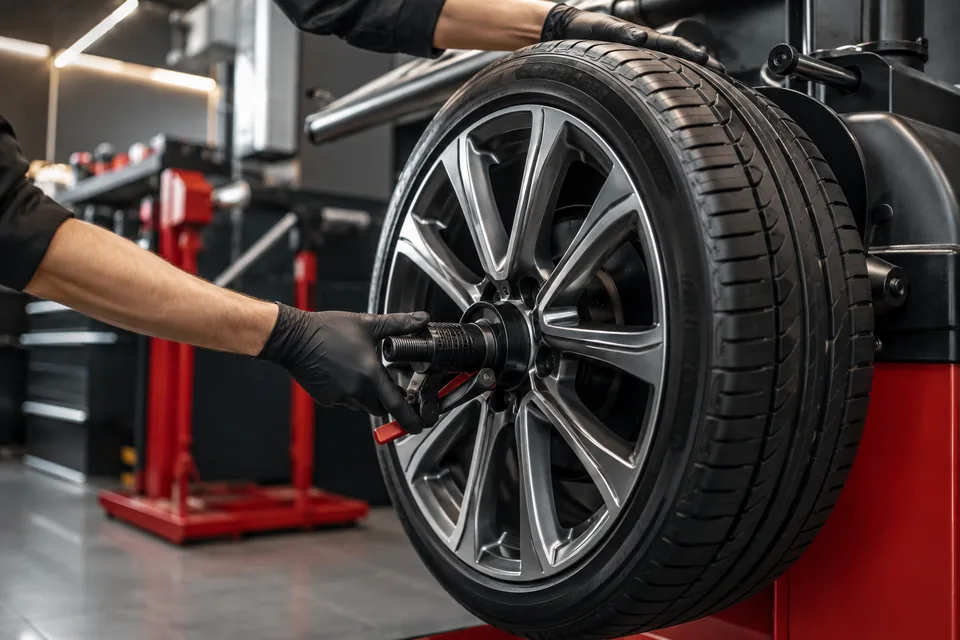
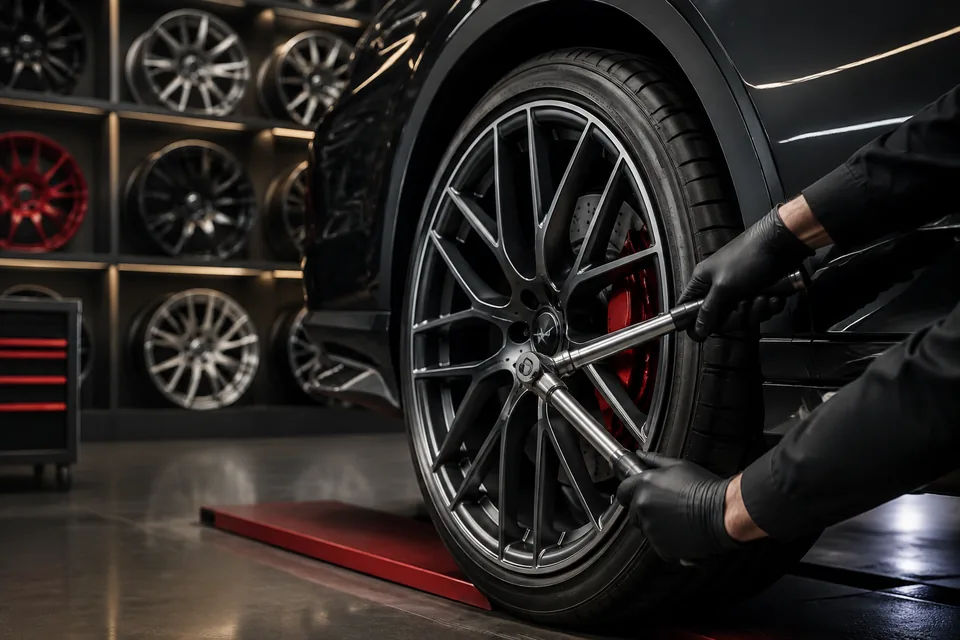
Correct wheel and tire installation includes more than tightening the fasteners. A professional installation should address tire mounting, wheel balancing, correct fastener seating, manufacturer-specified torque, TPMS setup, clearance inspection, inflation pressure and final visual inspection.
Some installations may also require a torque recheck according to the installer’s instructions. Learn about wheel installation and tire balancing before booking.
Choose a complete fitment, not just a wheel style
Surrey Wheels can help match custom wheels and rims to the vehicle’s bolt pattern, offset, centre bore, load requirements and intended use.
Customers should provide accurate vehicle information, including year, make, model, trim, drivetrain, existing modifications, intended tire size, and driving and load requirements.
Explore the wheel catalogue, visit the Surrey location, or get wheel and tire fitment help.